
Q&A with Co-Founder & CEO Stephen Hood
Tuesday, November 17, 2026 from Gualala, CA
In 2021, Marin Sonoma Impact Ventures launched the North Bay’s first regional venture capital fund and began deploying capital into Marin + Sonoma’s most promising startup companies.
Today, we are excited to share details about our investment in Telepath, a North Bay-based software company building user interfaces for the next era of AI personal computing.
Telepath’s first release, Television, is a new generative user interface for personal AI agents. It works with any agent harness, giving users virtual screens to create and manage visual HTML ‘artifacts,’ which can be anything from static visualizations to editable documents or even entire vibe-coded web apps. Television is the missing GUI (graphical user interface) for computing tasks that are a poor fit for scrolling streams of text.
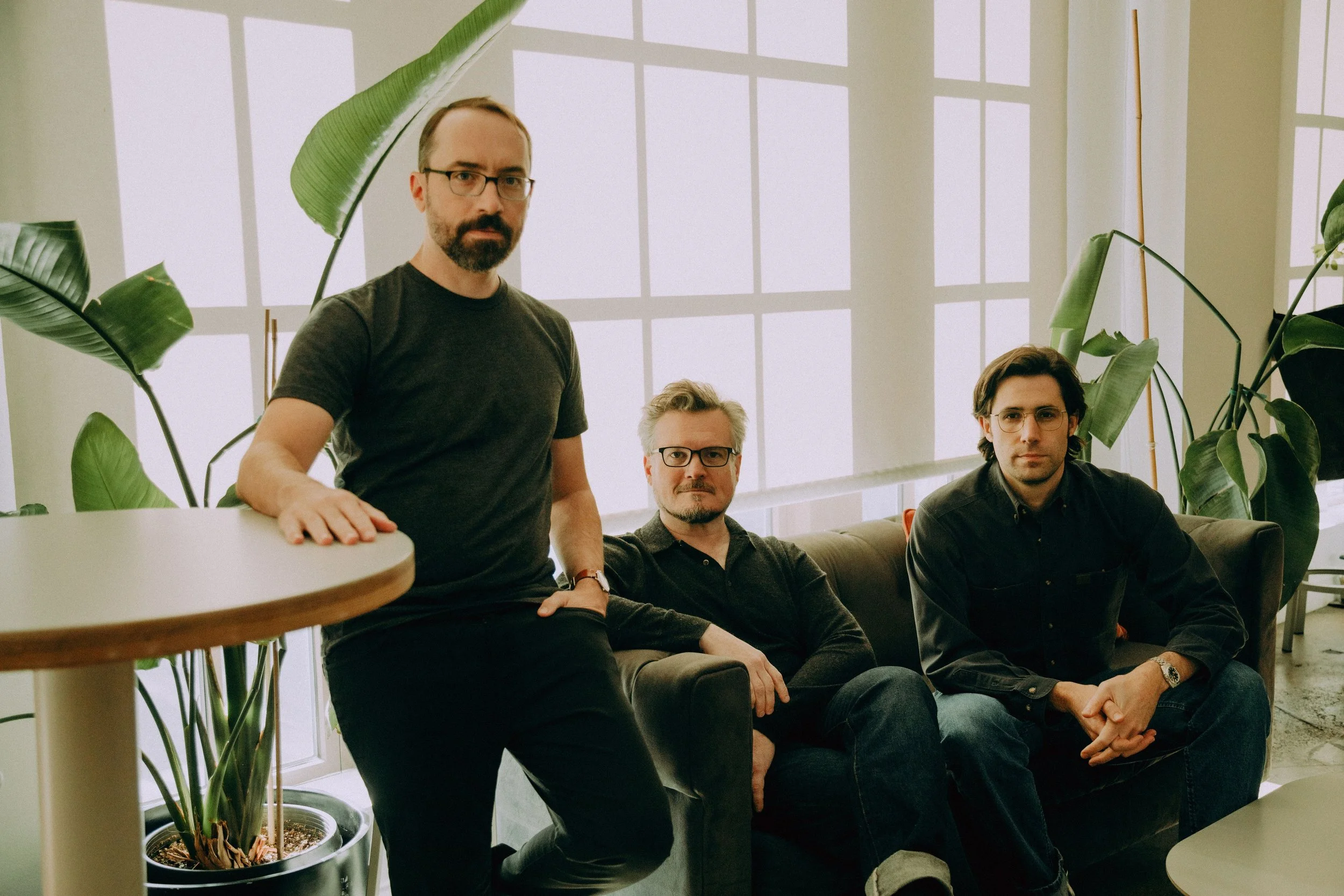
Telepath co-founders (left to right) Josh Whiting, Stephen Hood, and Rupert Manfredi
Why We Invested
AI’s early adopters run simultaneous agents completing many disparate tasks, and the primary way users interact with these agents is via long streams of text. This medium is ill-suited for most computing use cases, and it’s why computers shifted to GUIs (think apps versus text streams) over forty years ago.
Yet today’s leading AI products seem stuck in prior computing eras with their reliance on text. Telepath is changing this with a muti-step vision. First, Telepath has launched Television, where users take in knowledge from and interact with agents via visual artifacts rather than text. Artifacts allow users to create personalized takes on familiar interfaces (e.g. calendars, checklists) and turn them into persistent dashboards.
Telepath is starting with the interface layer but also has a grander vision: to assemble and distribute a complete AI-native computing experience. Telepath envisions a new kind of personal computer characterized by deep personalization and dynamic interfaces instead of pre-made applications. This will liberate users from the limitations of traditional software and give them the control and agency previously only available to programmers.
Telepath’s three co-founders, CEO Stephen Hood, Rupert Manfredi, and Josh Whiting, all worked together at Mozilla where they collaborated on projects at the intersection of AI and open source. MSIV is proud to have backed this experienced team as part of its most recent financing, and we’re excited for Telepath to put the North Bay on the map at the center of visual creativity and AI innovation.
MSIV Founder & Managing Partner Zachary Kushel sat down with Telepath Co-Founder & CEO Stephen Hood to discuss his team’s vision for the future of the AI computing era.
ZK: Stephen, where did the inspiration come from for you to launch Telepath?
SH: I've been a lifelong computing enthusiast since I was in elementary school, originally playing with computers as a hobby, which led me to spend my whole career in tech. And I was always inspired by these moments in computing history when it became clear something was changing in a dramatic way. Whether it was the original Apple II, or later the Macintosh and the IBM PC, all of which heralded the next era of computing.
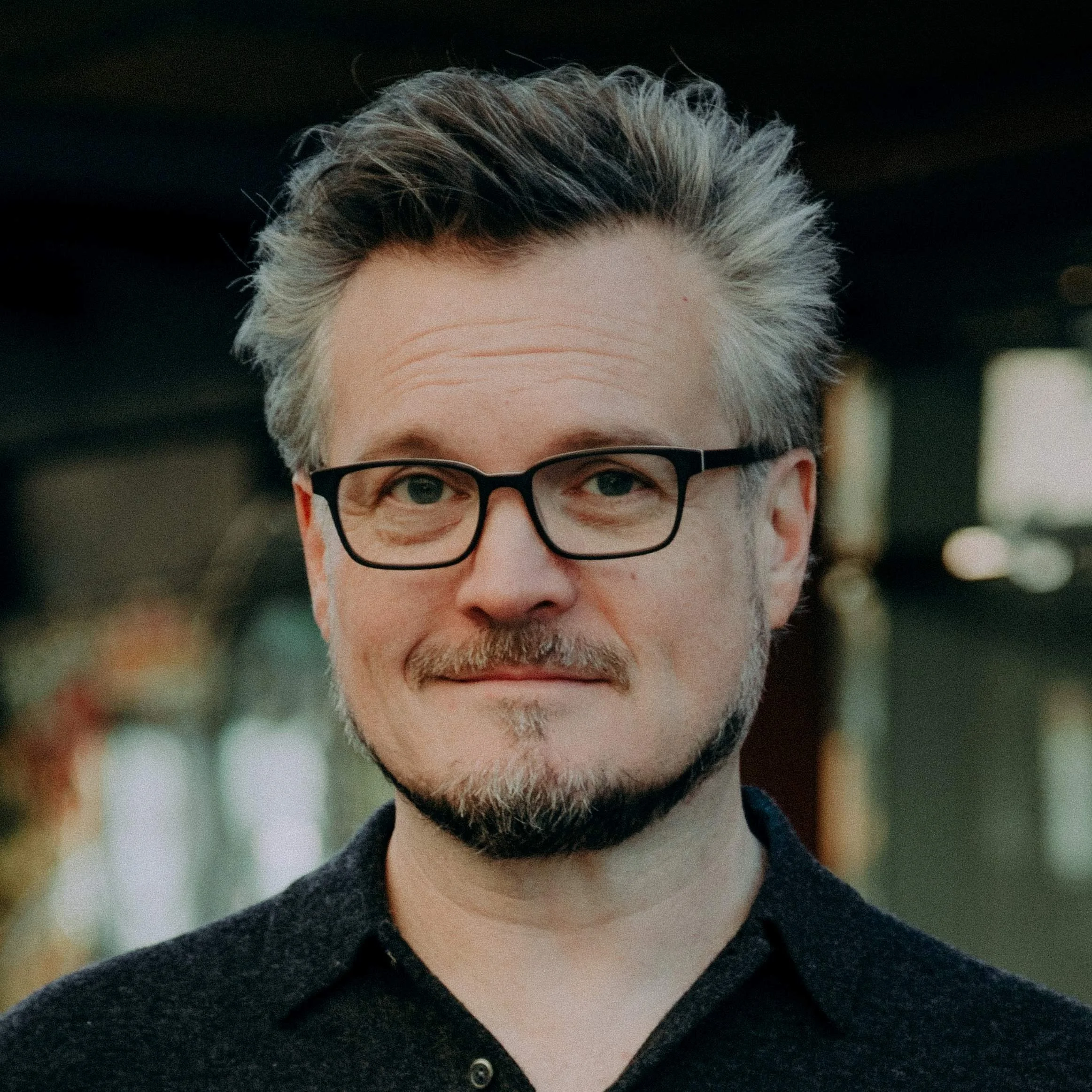
Telepath CEO Stephen Hood
Most recently I was leading open-source AI at Mozilla where I worked alongside my two co-founders, and I was seeing a stream of new tools with AI and LLMs, and it occurred to me in a flash that this was that next moment. AI isn’t really about chatbots, but it’s about a different type of computer, one that can understand you and respond to you on your terms, which has never been possible before. Our founding team knew we wanted to be a part of building that future, and that’s how Telepath was born.
ZK: Tell us more about Telepath’s product vision – what will this future of computing look like?
SH: Telepath’s vision is to bring into the world a new personal computing experience based on intelligent machines that understand the user. This is for everyone, not just tech nerds and early adopters, and we want computing to be more powerful, personal, joyful, and magical than it has ever been in the past.
Our first step is a product we call Television, which we’ve recently open-sourced. It gives you a visual space for working with agents. It works with any agent and any model you want to use, so you’re not locked into one company’s products.
Today’s AI agent power users are the early adopters of a new kind of computing experience, but they’re trapped in an MS-DOS-like world of text. It feels like we’ve gone 50 years back in time, and there’s no way that’s the interface for this next era. Television will help users better visualize this future and, as it becomes popularized, our larger vision is to distribute a new kind of computing experience for this modern stack.
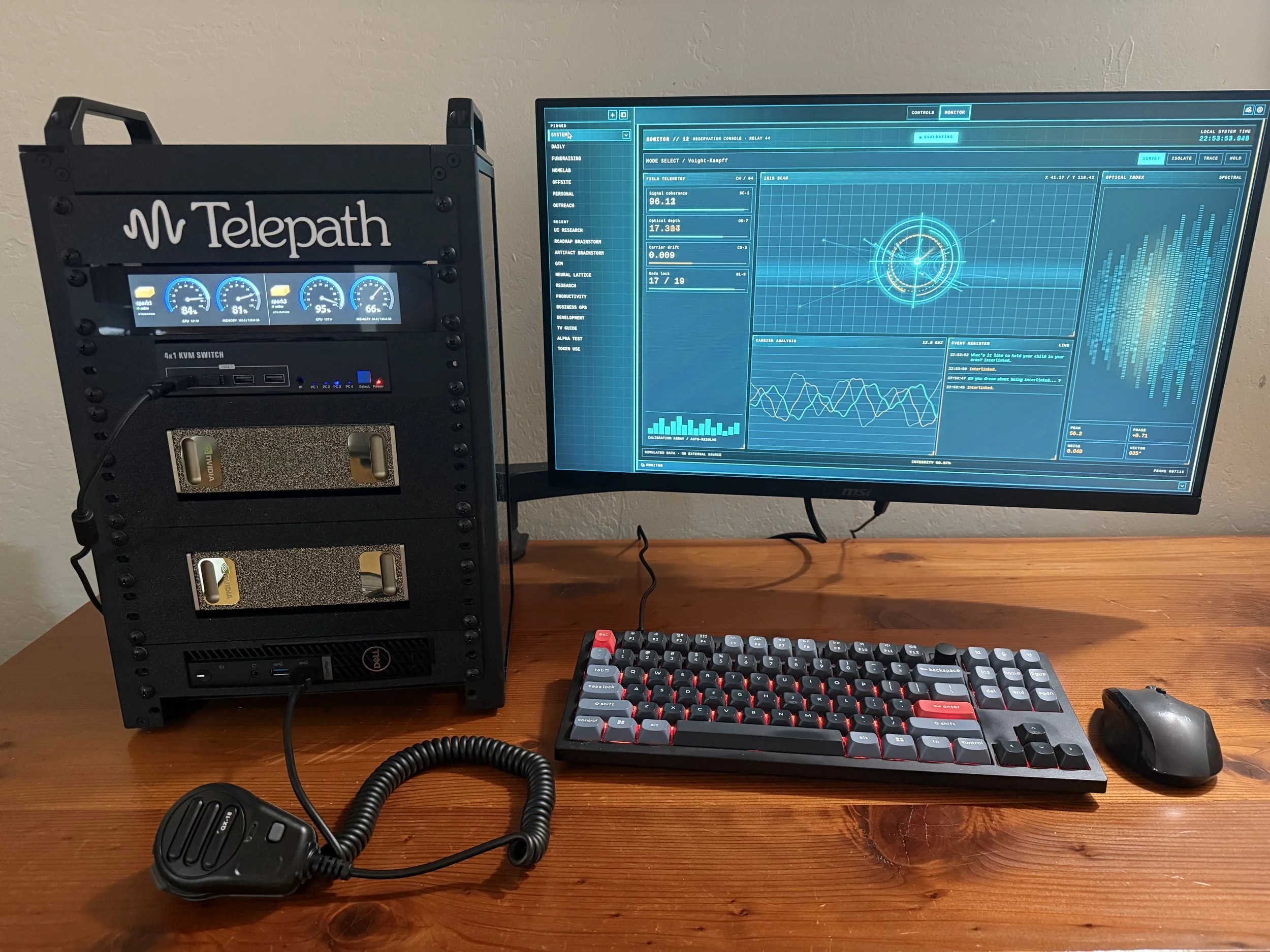
We’re fundamentally a software company, but to help us ‘live in the future,’ we recently built our own prototype computer, which we call the Telepath Alto, a nod to the computer Xerox built in the 1970s to help them invent the modern GUI. Our Alto runs Television and an AI agent, but it also runs open weight frontier-class LLMs locally, resulting in a computing experience that’s completely under the user’s control and ownership. Just a few weeks ago we presented a demo of our Alto at MozFest 2026 in Barcelona. It was a blast to watch people walk up to it and, with zero training, intuitively use an entirely new kind of computer.
ZK: How do you feel about the AI future that is rapidly being thrust upon all, both early-adopters and later technology adopters?
SH: It’s important for us to have optimistic visions of the future, and right now there aren't a lot of those, especially when it comes to AI. So much of what is being said in the media is negative, and a lot of that is earned. But we won't get to a better future by only focusing on the problems. You can't ignore them, but you need to couple them with an optimistic vision of how things can improve so we all can aim for something better, and we certainly see ourselves in that camp.
We believe AI technology can lead to a better computing experience for people that enriches their lives and gives them more capability instead of robbing them of their humanity and agency, and that’s precisely what we’re fighting for in building this company.
ZK: Please introduce us to who you are as our North Bay neighbor – what are you up to outside of work and how did you wind up living along the Sonoma/Mendocino coast?
SH: I was born down in the Monterey area, grew up back east, and after college moved back to California and spent my adult life in the heart of Silicon Valley. My wife and I would come visit the Sonoma Coast and fell in love with this area, and we decided to put in an offer on a vacation place about a week before the world shutdown with COVID. With that event, we asked ourselves ‘what are we waiting for?’ to be closer to nature, the natural world, and a different pace of life, so we and our furry friends moved up here full time just over six years ago and haven’t looked back.
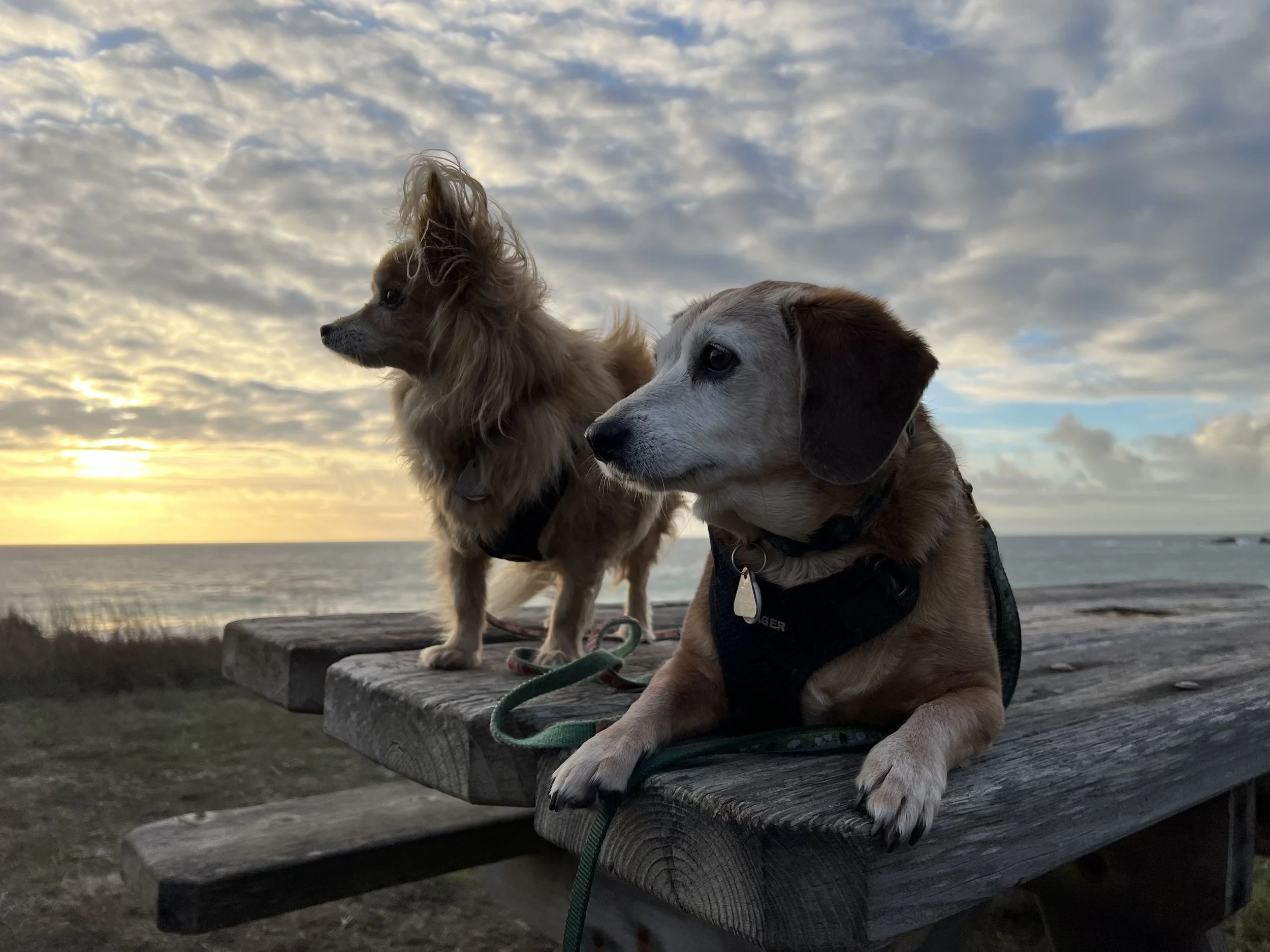
Stephen’s ‘furry friends’ along the North Bay coast
It’s been transformative for us, for our mental and physical health in dramatic ways, and has also had an impact on my work and my perspective on technology. There is an insular bubble to Silicon Valley and San Francisco – it has a certain energy to it, but it also brings a level of suffocation. When you’re trying to build something where your audience is that bubble, that may be fine, but when your goal is to build for the masses, it’s helpful to live outside of all of that, and that’s why the North Bay has been such a perfect home for this venture.
ZK: What excites you about the potential of the growing Marin + Sonoma startup community and collaborating with MSIV?
SH: There is a real North Bay opportunity to foment a new momentum and build companies amongst a community of people who want to create a distinct culture, and we’ve seen this happen before around the extended Bay Area. Digital Research was founded in the 1970s in Pacific Grove, not Palo Alto. Our North Bay region has seen Lucasfilm and Pixar and so many other amazing companies stem from the local creative scene, and I’m so excited to be a part of writing that next chapter for our region.
I also want to call out how important it is that MSIV and the broader North Bay startup community supports our values as we build Telepath. Josh, Rupert, and I all worked together at Mozilla, a company at the forefront of openness, user choice, user agency, privacy, and safety, which is critical in this fast-moving AI era. These values inform how we build Telepath, and our need to keep the user in control and not exploit their data and privacy for corporate benefit is absolute. We appreciate the broader give-first community MSIV is building, and we’ve already met so many local operators and founders who share these open values, which is encouraging to us as we build.
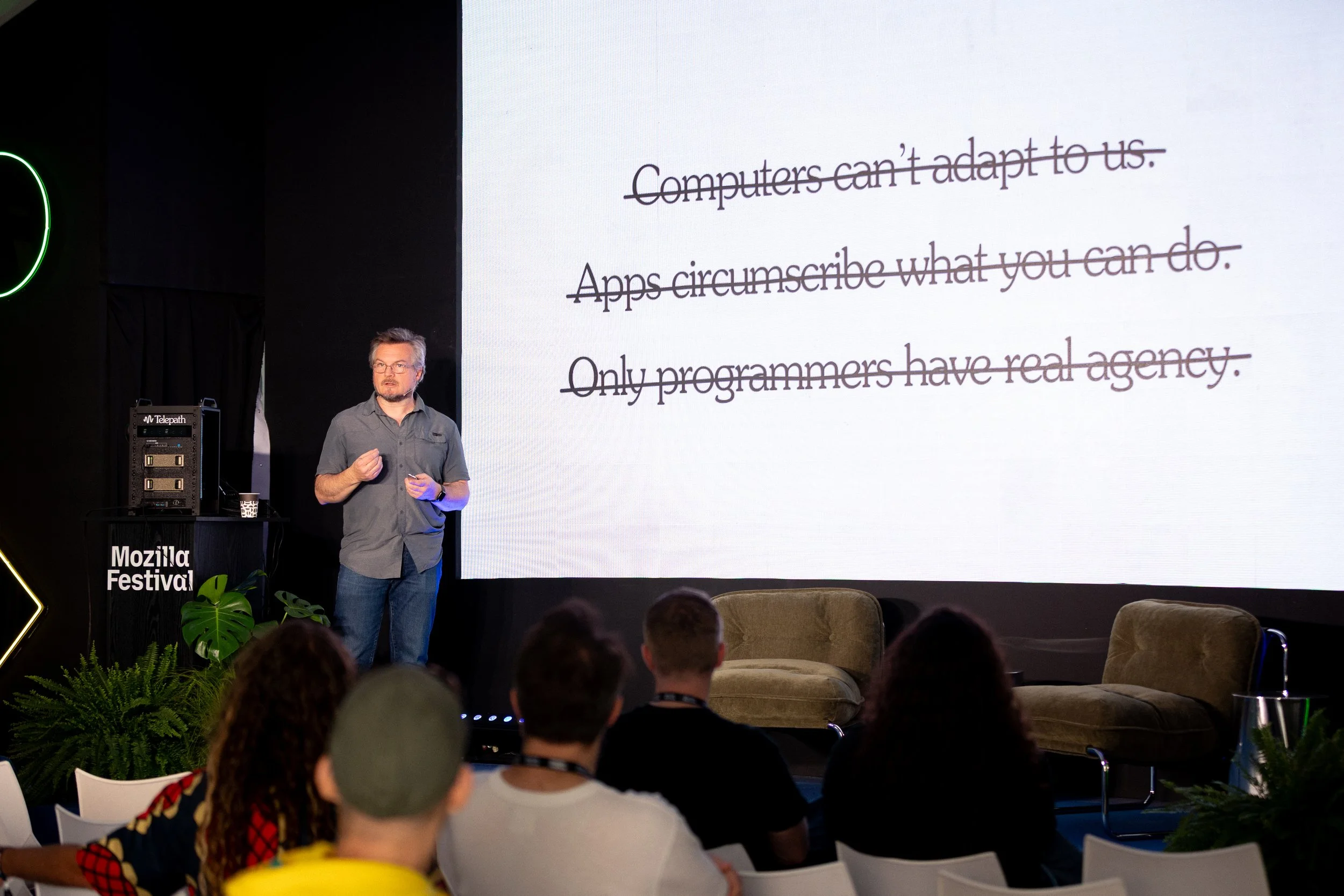
Stephen presenting a keynote on Telepath at MozFest 2026 in Barcelona in October 2026
